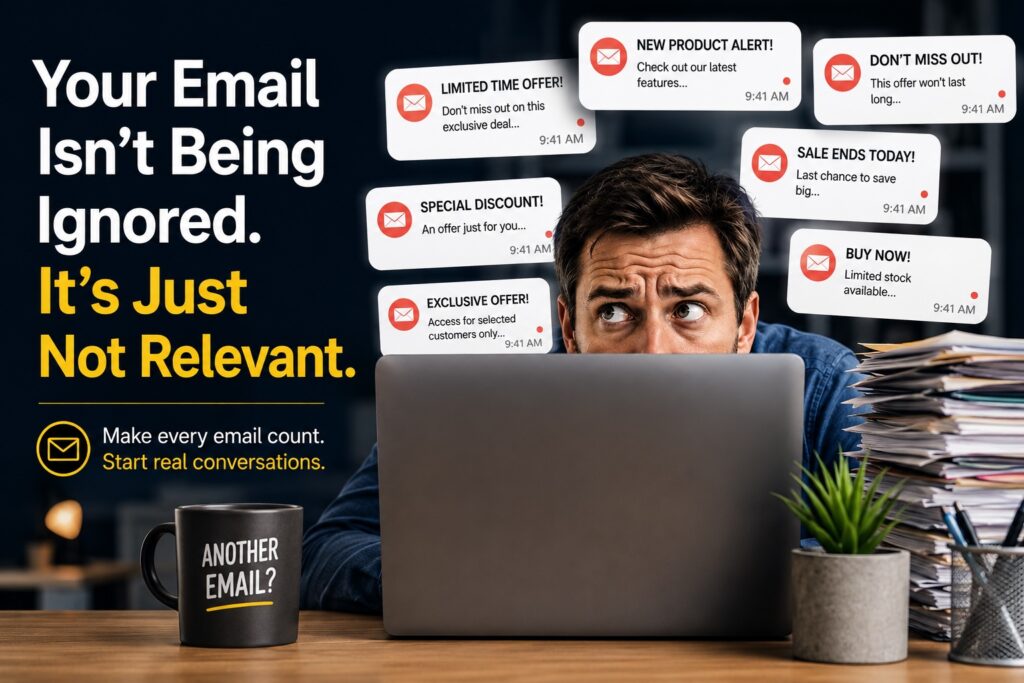
Every inbox is full.
Your prospects wake up to dozens of emails every morning. Most disappear into the archive without being opened. Others are deleted within seconds.
The uncomfortable truth?
Your email isn’t competing with your competitors. It’s competing for attention.
That’s why sending more emails rarely creates more business.
The companies that consistently generate pipeline through email don’t send more campaigns. They send better ones.
If your email marketing isn’t creating conversations, meetings and opportunities, it isn’t supporting business development. It’s simply creating more noise.
Key Takeaways
- Email remains one of the highest ROI marketing channels for B2B businesses.
- Business development emails should educate first and sell second.
- Segmentation and personalisation dramatically improve engagement.
- Pipeline, conversations and revenue matter far more than vanity metrics.
- The best email programmes build trust long before a buyer is ready to purchase.
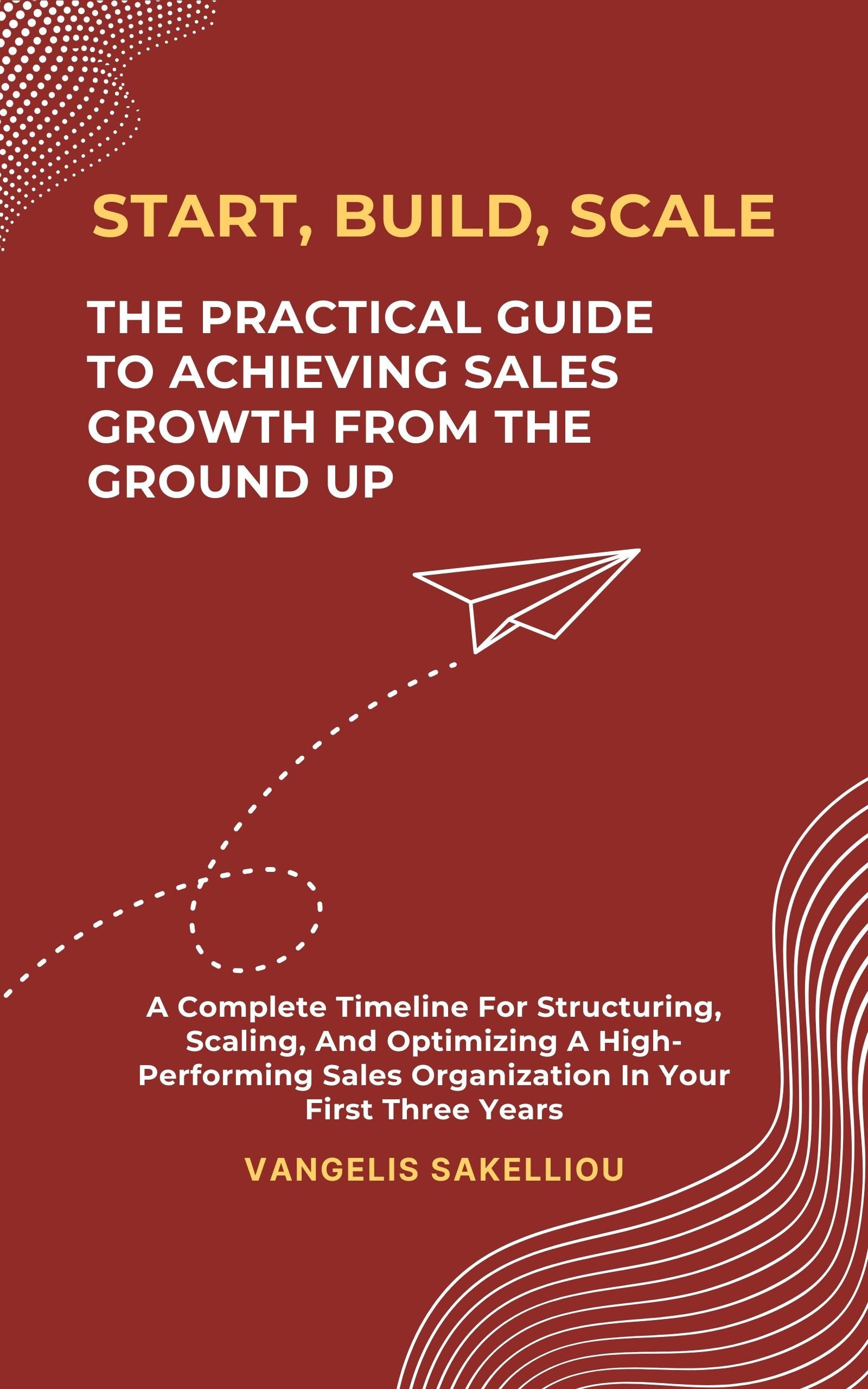
Invest in your growth — get my Sales Growth book on Amazon HERE and start transforming your business today.
If you’re looking to grow your sales and build stronger client relationships, take a look at how I help teams like yours — and feel free to reach out for a chat.
Why Is Email Still One of the Best Channels for Business Development?
Every year someone claims email marketing is dead.
Every year the data proves the opposite.
According to Litmus, businesses generate an average return of $36 for every $1 invested in email marketing, making it one of the highest-performing digital marketing channels available.
Why?
Because B2B buying journeys are rarely quick.
Decision-makers often spend weeks or even months researching suppliers, discussing options internally and building a business case before speaking to sales.
During that time, your company has two choices:
- Stay visible and helpful.
- Disappear until the prospect forgets you.
Email gives you the opportunity to stay relevant throughout that journey.
Why Do Most Business Development Emails Fail?
Because they’re written from the company’s perspective instead of the customer’s.
Take a look at your last email campaign.
How many times did you mention:
- Our platform
- Our services
- Our latest feature
- Our company
Now compare that with:
- Your challenges
- Your objectives
- Your team’s productivity
- Your business growth
One talks about the supplier.
The other talks about the buyer.
That small shift completely changes how the email is received.
People don’t buy products because suppliers have features.
They buy because they have problems they want solved.
Stop Sending Sales Emails. Start Solving Problems.
Here’s something many organisations overlook.
People don’t subscribe because they want more marketing emails.
They subscribe because they expect to learn something useful.
Every email should answer one practical question.
For example:
- How can I improve sales productivity?
- Why are our sales incentives driving the wrong behaviour?
- Which KPIs should sales leaders actually monitor?
- How can we reduce manual work?
- What mistakes should we avoid?
When readers consistently learn something valuable, trust grows naturally.
Sales conversations become much easier because credibility already exists.
Don’t miss out — check out the latest Growth Stack Landscape! I’ve mapped the essential tools every growth and GTM team needs to drive results. Access it HERE
If you’d like to receive more insights like this and be part of a small group I email from time to time, just
A Real Business Example
I worked with a B2B software company that sent a product newsletter every two weeks.
Every edition focused on new features, software updates and company announcements.
The open rates looked reasonable.
The business results didn’t.
Very few prospects replied.
Very few meetings were generated.
We changed one thing.
Instead of talking about the product, every email focused on solving a customer problem.
One edition explained how to eliminate repetitive manual processes.
Another explored common mistakes organisations make when implementing new technology.
Another discussed industry trends and practical recommendations.
The product only appeared when it genuinely helped explain the solution.
Within a few months, something interesting happened.
Prospects started replying with questions.
Sales teams reported that buyers arriving from email campaigns already understood the challenges the software addressed.
Meetings became more consultative because trust had already started to develop.
Email stopped being treated as a promotional channel.
It became part of the company’s business development strategy.
That isn’t unusual.
The best B2B email programmes don’t try to close a sale with every email.
They simply earn the right to continue the conversation.
Insight: People rarely remember the company that sent the most emails. They remember the company that consistently helped them solve real business problems.
Why Personalisation Means Much More Than Using a First Name
Adding someone’s first name isn’t personalisation.
Understanding what matters to them is.
Think about the people involved in a typical B2B buying decision.
A Finance Director cares about reducing costs and improving control.
A Head of Sales wants predictable revenue growth.
Sales Operations wants automation, visibility and fewer manual processes.
HR focuses on motivation, fairness and employee performance.
Each person has different priorities.
Your messaging should reflect those differences.
Segmentation based on job role, industry, buying stage and previous engagement will almost always outperform sending the same email to everyone.
Stop Measuring Vanity Metrics
Many businesses still judge success by:
- Open rates
- Click-through rates
- Downloads
These metrics provide useful signals.
But they don’t tell the whole story.
Instead, ask questions like:
- How many qualified meetings came from this campaign?
- How much pipeline did it influence?
- How many opportunities progressed?
- How many meaningful conversations started?
Business development exists to generate revenue.
Email marketing should be measured the same way.
Insight: An email with a lower open rate that generates five qualified meetings is far more valuable than one with thousands of opens but no pipeline.
Common Mistakes
Many organisations unknowingly reduce the impact of their email marketing by:
- Talking about themselves instead of customer challenges.
- Sending identical emails to every contact.
- Trying to sell in every campaign.
- Ignoring existing customers while chasing new prospects.
- Sending emails inconsistently.
- Failing to test subject lines, content or calls to action.
- Measuring activity instead of business outcomes.
One poor campaign won’t damage your reputation.
Months of irrelevant communication probably will.
What Good Looks Like
The highest-performing B2B organisations usually follow the same principles.
They:
- Segment their audience carefully.
- Share educational content consistently.
- Solve problems before promoting products.
- Align Sales and Marketing around shared pipeline goals.
- Use marketing automation without sounding automated.
- Continuously test and improve campaigns.
- Measure contribution to pipeline rather than email activity.
Their emails don’t feel like marketing.
They feel like advice from someone who genuinely understands the challenges their audience faces.
Final Thoughts
Many organisations think email marketing is about sending campaigns.
It isn’t.
It’s about staying relevant until the customer is ready to buy.
Business development isn’t built through one email.
It’s built through dozens of valuable interactions that establish trust over time.
Every email should leave the reader knowing something they didn’t know five minutes earlier.
Do that consistently and something changes.
Prospects stop seeing you as another supplier.
They start seeing you as someone worth talking to.
And that’s when email becomes far more than a marketing channel.
It becomes one of your strongest business development assets.
If you’re reviewing your business development strategy, don’t ask how many emails you sent this quarter.
Ask yourself a better question:
How many meaningful business conversations did your emails create?
Frequently Asked Questions
Is email marketing still effective for business development?
Yes. Email remains one of the most effective B2B channels for nurturing prospects, educating buyers and generating qualified sales opportunities. The key is delivering relevant, valuable content rather than constant promotional messages.
How often should a business send marketing emails?
Consistency is more important than frequency. Many organisations achieve stronger engagement by sending one or two high-quality emails each month instead of multiple promotional emails every week.
What metrics should I track?
Beyond open and click-through rates, focus on business outcomes such as qualified meetings, replies, pipeline generated, opportunity progression, conversion rates and revenue influenced. These metrics provide a much clearer picture of how email marketing supports business development.
Sources & References
- Litmus. State of Email. https://www.litmus.com
- HubSpot. State of Marketing Report. https://www.hubspot.com/state-of-marketing
- Campaign Monitor. Email Marketing Benchmarks. https://www.campaignmonitor.com/resources
- McKinsey & Company. The Consumer Decision Journey. https://www.mckinsey.com
- Data & Marketing Association (DMA UK). https://dma.org.uk
FREE White Paper – Grow your sales internationally: Click HERE
FREE How To Guide – Navigating through sales opportunities: Click HERE
FREE Starter Kit – Powering up your lead generation: Click HERE
If you’d like to receive more insights like this and be part of a small group I email from time to time, just sign up using this link.
In case you are looking to grow your business, I am here for you. Fill up THIS form and let’s talk
.