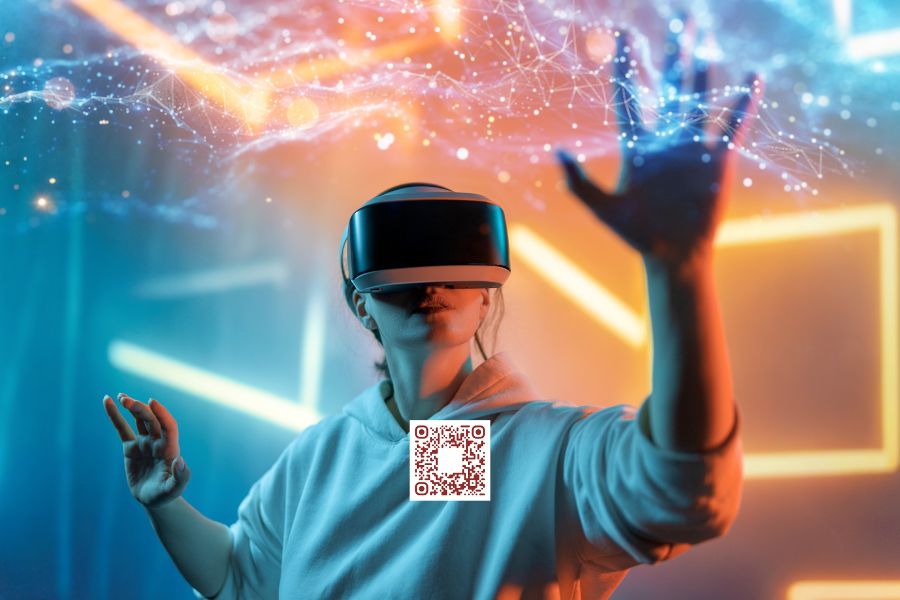
Imagine presenting your product to a potential customer without physically bringing it into the room. Or allowing someone to experience your service before spending a penny.
This is what Augmented Reality (AR) and Virtual Reality (VR) can offer businesses.
For years, we associated these technologies mainly with gaming and entertainment. Today, they have practical applications in marketing, sales, customer engagement and business development.
But here’s the question I find more interesting: Can AR and VR genuinely help businesses generate more sales, or are they simply expensive ways to impress customers?
Let’s explore where these technologies create commercial value, where they don’t, and how businesses can use them effectively.
Key Takeaways
- AR and VR can help customers make purchasing decisions by allowing them to experience products before buying.
- Immersive experiences can improve customer engagement, particularly when demonstrating complex products or services.
- AR and VR can support sales teams through interactive demonstrations, training and remote collaboration.
- Technology alone doesn’t generate revenue. Businesses need clear commercial objectives and measurable results.
Invest in your growth — get my Sales Growth book on Amazon HERE and start transforming your business today.
If you’re looking to grow your sales and build stronger client relationships, take a look at how I help teams like yours — and feel free to reach out for a chat.
What Is the Difference Between AR and VR?
Although people frequently mention them together, these technologies serve different purposes.
Augmented Reality (AR) adds digital elements to the physical world. For example, customers can use their smartphones to visualise furniture in their homes.
Virtual Reality (VR) places users inside a completely digital environment. Imagine exploring a property, manufacturing facility or showroom without physically visiting it.
Both technologies allow businesses to communicate something that traditional presentations, photographs and brochures sometimes struggle to explain.
The commercial opportunity is straightforward: Help customers understand what they’re buying before they commit.
Don’t miss out — check out the latest Growth Stack Landscape! I’ve mapped the essential tools every growth and GTM team needs to drive results. Access it HERE
If you’d like to receive more insights like this and be part of a small group I email from time to time, just
How Can AR and VR Improve Sales and Marketing?
1. Can Product Visualisation Increase Sales Conversions?
One of the biggest challenges in sales is helping customers understand a product’s value.
This becomes particularly difficult when selling complex, expensive or highly customised solutions.
AR and VR can address this challenge.
Consider IKEA. Its digital tools allow customers to visualise furniture in their homes before purchasing.
The customer can evaluate the product in a relevant environment rather than relying entirely on photographs.
The commercial potential is significant.
According to Shopify, merchants adding 3D content experienced an average 94% conversion lift in its reported merchant data.
That doesn’t guarantee similar results for every business, but it demonstrates the potential of interactive product experiences.
My view: The closer you bring customers to experiencing your product, the easier it becomes for them to evaluate its value.
2. Can Immersive Experiences Generate Better Sales Leads?
Think about the last industry exhibition you attended.
How many stands offered essentially the same experience? A screen, brochures and someone explaining their products.
Now imagine a manufacturer allowing visitors to explore an entire production facility through VR.
Or a property developer offering interactive virtual tours of buildings still under construction.
These experiences can attract attention and create more meaningful conversations.
However, there’s an important distinction.
Attracting visitors isn’t the same as generating qualified leads.
A successful immersive marketing campaign should measure:
- Qualified leads generated.
- Meetings booked following the experience.
- Lead-to-opportunity conversion rates.
- Pipeline value influenced.
- Cost per qualified opportunity.
An impressive experience without measurable commercial outcomes remains a marketing expense.
3. Can AR and VR Improve Sales Training?
Another interesting application is sales enablement.
Imagine salespeople practising difficult negotiations, handling objections or presenting complex solutions inside realistic virtual environments.
They can experiment, make mistakes and improve without risking actual customer relationships.
Research from PwC found that employees completing VR-based soft-skills training learned up to four times fasterthan classroom learners and were up to 275% more confident in applying their learning.
These findings come from a specific training study, so businesses should test whether similar benefits apply to their teams.
Nevertheless, the opportunity extends beyond marketing.
AR and VR can potentially improve the capabilities of the people responsible for generating revenue.
Should Every Business Invest in AR and VR?
Certainly not.
I would challenge any business considering these technologies to answer one question first:
What commercial problem are we trying to solve?
Research from McKinsey suggests that customers often prefer immersive experiences that solve practical problems over purely virtual experiences with limited real-world value.
That’s an important lesson.
Technology should support the buying journey rather than complicate it.
Before investing, consider three factors:
- Customer value: Does the experience help customers understand, evaluate or purchase your product?
- Commercial impact: Can it improve conversion rates, shorten sales cycles or reduce acquisition costs?
- Implementation costs: Will the expected benefits justify development, maintenance and adoption expenses?
Sometimes, a well-produced demonstration video delivers better results than an expensive VR experience.
Common Mistakes Businesses Make
The biggest mistake is treating AR and VR as marketing attractions rather than commercial tools.
Other common mistakes include:
- Investing without defining measurable objectives.
- Creating complicated experiences that discourage participation.
- Ignoring accessibility and customers’ willingness to use the technology.
- Measuring engagement without connecting it to sales outcomes.
An immersive experience should make buying easier, not introduce another obstacle.
What Does a Successful AR or VR Strategy Look Like?
I would recommend starting small.
First, identify one specific problem in your sales or customer journey.
Second, select an appropriate technology and develop a limited pilot.
Third, compare results against your existing approach.
For example, if you sell industrial equipment, test whether interactive demonstrations generate more qualified opportunities than traditional product presentations.
Measure conversion rates, sales cycle duration and cost per opportunity.
Finally, scale only when the results justify further investment.
Conclusion: Focus on Commercial Value, Not Technology
AR and VR offer interesting opportunities for business development and marketing.
They can improve product demonstrations, create engaging customer experiences and strengthen sales training.
But their success depends on something much more fundamental than technological innovation.
They must solve a real business problem.
Before investing, examine your customer journey. Identify where customers struggle to understand your offering, where salespeople need better tools and where purchasing decisions become unnecessarily difficult.
That’s where immersive technology may create genuine value.
The question isn’t whether your business should use AR or VR.
It’s whether these technologies can help you sell more effectively.
Frequently Asked Questions
1. How can small businesses use AR and VR for marketing?
Small businesses can start with affordable applications such as smartphone-based AR product visualisation, interactive 3D models or virtual property tours. They should prioritise solutions that address specific customer needs without requiring substantial investment.
2. Can AR and VR really increase sales conversions?
They can, particularly when customers benefit from visualising or experiencing products before purchasing. However, results depend on the industry, product complexity, implementation quality and customer adoption.
3. How should businesses measure the ROI of AR and VR?
Businesses should track commercial metrics such as qualified leads, conversion rates, sales cycle duration, customer acquisition costs and incremental revenue. Comparing these results against traditional sales and marketing approaches helps determine whether the investment creates measurable value.
FREE White Paper – Grow your sales internationally: Click HERE
FREE How To Guide – Navigating through sales opportunities: Click HERE
FREE Starter Kit – Powering up your lead generation: Click HERE
If you’d like to receive more insights like this and be part of a small group I email from time to time, just sign up using this link.
In case you are looking to grow your business, I am here for you. Fill up THIS form and let’s talk